
Led by top technology partners and industry pioneers
Event:
ShelterGenius
About:
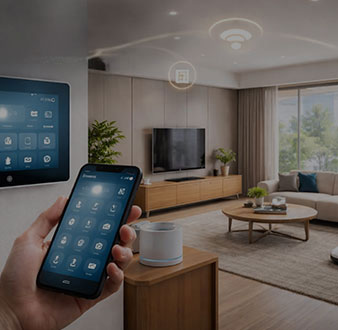
Smart housing design solutions
Prize:
₹ 1,50,000
Format
In-person
Event Overview
ShelterGenius 3.0 is a future-forward student design competition that brings together architecture, design, engineering, and computing to explore new ways of living and working within small yet intelligent spaces. It offers an exciting opportunity for students to experiment, collaborate across disciplines, and rethink how compact environments can be designed to support modern lifestyles.
As work-from-home culture becomes a permanent reality and urban living spaces continue to shrink, the need for smart, flexible, and human-centred housing solutions is growing rapidly. ShelterGenius 3.0 invites students to respond to this challenge through integrated design thinking, where creative spatial planning is strengthened by ideas of automation, sustainability, and user well-being.
The competition encourages curiosity and originality, valuing strong ideas and clear thinking over technical complexity. Students do not need advanced technical skills to participate, what matters most is the ability to think creatively, design responsibly, and imagine how intelligent spaces can improve everyday life. ShelterGenius 3.0 is ultimately a platform to learn, explore, and design boldly for the future of compact living.
What Is the Design Challenge?
Design a single-occupant, Al-enabled Work-from-Home Studio Unit within a 4 × 4 m (16 sqm) modular footprint that supports living, working, resting, and daily activities, all within a smart and flexible architectural system.
Eligibility Criteria
Undergraduate students (all years)
Disciplines:
Architecture
Design
Civil Engineering
Computer Science
Electronics & Electrical Engineering
Teams of 2-3 students
Interdisciplinary teams are strongly encouraged
No prior Al, loT, or AR/VR experience required
Core Focus Areas
ShelterGenius 3.0 challenges participants to design a compact, intelligent living unit by focusing on the following key areas:
Space Optimization for Work-from-Home
Smart use of a 4 × 4 m studio through flexible layouts, multifunctional furniture, and day-night adaptability.
• Modular & Scalable Design
A repeatable unit that can expand horizontally or vertically to form clusters and communities.
Smart Automation & Al Integration
Conceptual use of Al and automation to enhance comfort, efficiency, and user experience.Sustainability & Affordability
Climate-responsive planning, energy efficiency, and responsible material use for practical, eco-friendly living.
Competition Structure & Stages
STAGE I: Online Screening Round
Submission Format: 20-slide Presentation (PDF)
Last date of Submission: 5th February 2026 up to 11:00 am
Stage 1 Submission Portal Link: https://forms.gle/spzDRncVCQY1He4eA
What to include in Stage I Presentation (20 slides):
Design concept & idea
Site and climate assumption
Plan and zoning
Day-night transformation
Modular aggregation
Automation &Al logic
Sustainability strategies
Visuals, diagrams, renders
Shortlisted teams qualify for the Pre-Event Enablement Program & Final Round
STAGE II: Pre-Event Enablement Program (For Shortlisted Teams Only)
6th February 2026
This stage is structured to support shortlisted teams in strengthening both technical understanding and design articulation prior to the final round. The program is particularly beneficial for participants with limited prior exposure to Al, automation, or immersive visualization tools.
Objectives
To bridge the gap between conceptual design and system-level execution
To clarify fundamentals of Al, loT, and automation in residential environments
To support integration of technology with architectural and modular design strategies
To enhance presentation quality and visualization methods across disciplines
Program Components
Webinar on "Al in Design and Architecture": role of data-driven systems in spatial design and user comfort
Bootcamp on Modular Design Systems: principles of modularity, scalability, and transformable spaces
Session on loT and Al Integration for Home Automation: sensor-actuator logic, control workflows, and simulation
STAGE III: Final Design Presentation (Hybrid):
• 20 February 2026
What to present in Stage I!! Presentation
Presentation Deck: Maximum 30 slides (PDF) covering design, modular strategy, sustainability, and Al/automation concepts
Demonstration: AR/VR walkthrough to support and communicate spatial experience and system integration
Purpose: To clearly illustrate design intent, user interaction, and functionality of the smart living studio concept
Presentation Duration: 15 minutes, including AR/VR walkthrough
Selected and award-winning student designs will be showcased through a post-competition exhibition as part of ShelterGenius 3.0. The exhibition will serve as a platform for academic exchange, peer learning, and interaction with faculty and industry experts
Evaluation Criteria
The designs will be evaluated on the basis of:
Innovation & creativity
Space efficiency
Modular logic
Integration of automation
Sustainability
Comfort & usability
Clarity of presentation
ShelterGenius 3.0 is not about complexity, it is about clarity, creativity, and courage
Plagiarism & Al Usage Guidelines (Mandatory)
Originality Policy
All design ideas must be original
Direct copying or replication is prohibited
Jury may disqualify plagiarized entries
Responsible Use of Al
Al tools may be used for: Visual enhancement, Rendering, & Presentation support
Al tools must NOT be used for: Creating the original design idea and generating layouts or concepts
Recognition:
Prize Money by the sponsors:
1st prize: 715,000/-
2nd Prize: ·10,000/-
3rd prize: 75,000/
Registration Fee
Last Date of registration: 4th February 2026
Registration Link: https://forms.gle/rAQdyUS396HsxTvd9
{ 200 per team (One-time, non-refundable)
After completing the registration form, teams will be redirected to the payment section to pay 200 per team via the provided online payment link and upload the transaction receipt/ID for verification before final submission of registration.
Coordinator/POC:
Dr. Kapil Kumar Sinha, Assistant Professor:
+91 - 980 618 1263
kapil.e17598@cumail.in
Student Team:
Anish Aditya (B Arch) : +91 7800758321
Anish Aditya (B Arch) : +91 8222864121
Ar. Ridima Sharma, Assistant Professor :
+91 - 988 291 0251
Schedule & Timeline
Activity | Date |
Registrations Open | 12th January 2026 |
Registration Closes | 4th February 2026 |
Online Screening Submission (Stage I) | 5th February 2026 (11am) |
Shortlisting Announcement | 5th February 2026 |
Pre-Event Enablement Program (Stage II) | 6th February 2026 |
Final Design Presentation (Hybrid) (Stage III) | 20 February 2026 |
Exhibition | 21 February 2026 |


Get Tickets